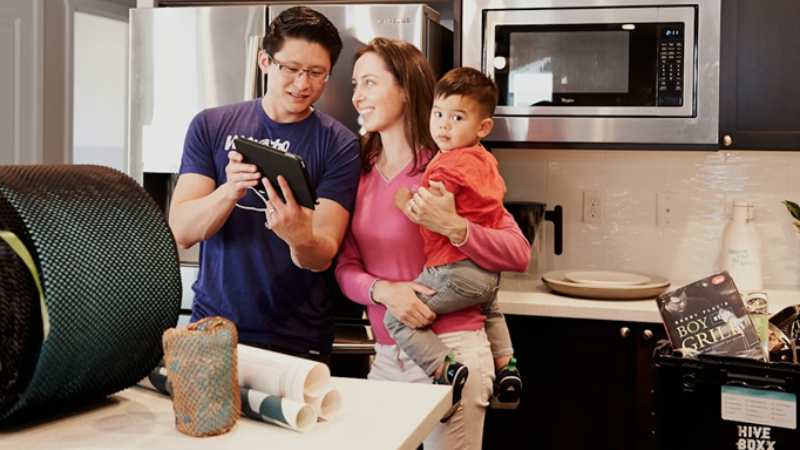
The biggest investment that any family will make during their lifetime is the building of a new home or the renovation of an existing one. As you work with an architect like BY Projects Architecture, the initial discussion will naturally turn to the immediate needs you have. You might have recently had a baby and need to create a nursery, or you might have young children who need a play room, or you might need a home office.
However, an effective design does not simply address the current needs but also the needs of the future. If you have a home that does not change with the times, then you might have to change homes, which can be stressful enough, not to mention the additional cost of stamp duty.
Understanding How Families Change
The home of the future will not necessarily be the same as the home of the present. You might have an open floor plan that allows you to watch over your young children as you make dinner, but the future might hold older teens who need their own space. As the children get older, they need better sound separation, and the play room of the past might need to become the study room of the future.
But in recent years, Australians are also embracing the concept of multi-generational living. You may need to accommodate your parents as they get older, or perhaps your kids will want to move home and save up to buy their own home. What about yourself? As we all get older, mobility issues may also be a consideration in the future. A home that does not change with the times is a home that is no longer relevant, but a home that is adaptable can expand and contract as needed.
Key Elements of Adaptable Design
One of the most powerful tools that can be employed in adaptable home design is that of spatial planning, particularly with regard to zoning within the home’s overall floor plan. Essentially, this is a matter of designing a home that can allow certain areas of the home to be closed off or opened up as needed. A guest room that is located on the ground floor with access to a nearby bathroom, for example, can quickly and easily transition from a home office to a teenager’s retreat, or a living space for an aging parent.
Another key aspect of adaptable home design is that of universal design, that is, a home that is designed to accommodate the needs of the largest population possible, regardless of their age. Elements such as wide hallways, flat thresholds from the home’s interior spaces to its exterior spaces, and reinforced walls within the bathroom area to accommodate future additions of grab bars are not necessarily major elements of home design, but they are incredibly important with regard to the overall lifespan of a home.
Practical Tips for Retrofitting and Planning
In the case of working with an architect on a retrofitting situation of an existing home, or designing a new home, it is also important to think about the skeletal structure of the home itself, particularly with regards to non-load-bearing walls within the floor plan of the home itself. For example, two smaller bedrooms could be combined into a very large master bedroom or studio living space, particularly if the people living in the home have children that will inevitably leave the nest at some point in the future.
Another important factor is the storage solutions that are included in the home itself. For example, the furniture can also be designed with multi-functional uses in mind. Elsewhere, a room filled with cupboards can be designed with cupboards that fold down to become a desk space. This can also mean that the hallway or lounge room can also be designed as an office space as well.
Another important factor is the wiring of the home itself, particularly with regards to the electrics and plumbing, which can save thousands of dollars if you decide that you need to install a kitchenette or an additional bathroom.
A Forever Home That Evolves With You
The idea of the “forever home” is not only an achievable reality but also one that should not be overlooked. The concept of the forever home is thinking beyond the current trends and styles and instead thinking about the future and how the home will function for you. Working with an architect on the design of the home will ensure that you have designed a forever home that is not only a home but an extension of you and your family that will grow with you.