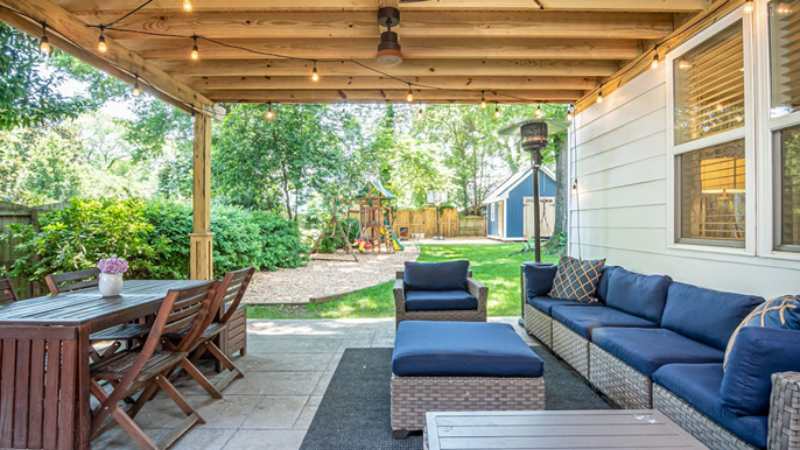
There’s a meaningful difference between having a backyard and having somewhere you actually use. In much of the Pacific Northwest, outdoor space that isn’t sheltered from rain becomes seasonal at best. In warmer climates, an unshaded patio becomes unlivable by mid-morning on a summer day. Generally, the problem isn’t the space itself, it’s the lack of protection that makes it feel inhospitable.
Patio cover installation in Portland, as an example, is one of the more common home improvement projects for exactly this reason. It takes an outdoor area from theoretical to functional, and done well, it changes how a household actually lives.
The Real Problem with Uncovered Outdoor Spaces
An exposed patio or deck is fine in perfect weather, which in most parts of the country means a limited window. The rest of the time, it’s a space you look at rather than use. Furniture fades, wood decking weathers, and the outdoor dining table that seemed like a great investment sits empty because the conditions won’t cooperate.
When you add a pergola or a solid patio cover or a louvred roof system to your patio, things are different. The patio is now a place to be when it is raining a little bit. You are protected from the sun in the middle of the day. A pergola or a solid patio cover makes the patio comfortable throughout the day. Even when you would normally stay away from the sunlight.
Different Cover Types Serve Different Needs
Pergolas with open lattice work create a partial shade effect and work well for climates where the primary goal is sun filtering rather than rain protection. For wetter climates, solid patio covers whether timber, polycarbonate, or insulated panels provide complete overhead protection and make the space truly all-weather.
Louvred systems offer an interesting middle ground: adjustable slats that can be opened for sun or fresh air and closed against rain, with motorized options available for convenience. They’re a more significant investment but arguably the most versatile solution.
The Design Integration Question
A patio cover that looks like it was added later on can make a house look bad. But a patio cover that was designed to go with the house works brilliantly. It matches the slope of the roof, uses the same kind of materials and colors, and works with the outdoor lights and heaters. It makes the house look a lot better and is also very useful. A patio cover like this can really add value to a home. It is functional too – a patio cover like this is a great thing to have for your home.
This is where spending time on the design phase pays off. The structural elements, the material palette, how it connects to the house – these decisions are much easier to get right before installation than after.
Planning, Permits, and Practical Considerations
Most patio cover installations of significant size require a building permit, and some areas have restrictions on height, coverage footprint, or proximity to property boundaries. A contractor experienced in local requirements will navigate this on your behalf, but it’s worth knowing upfront so you’re not surprised by the timeline. The return on investment for quality outdoor sheltering is well established functional outdoor space adds meaningfully to both livability and property value!