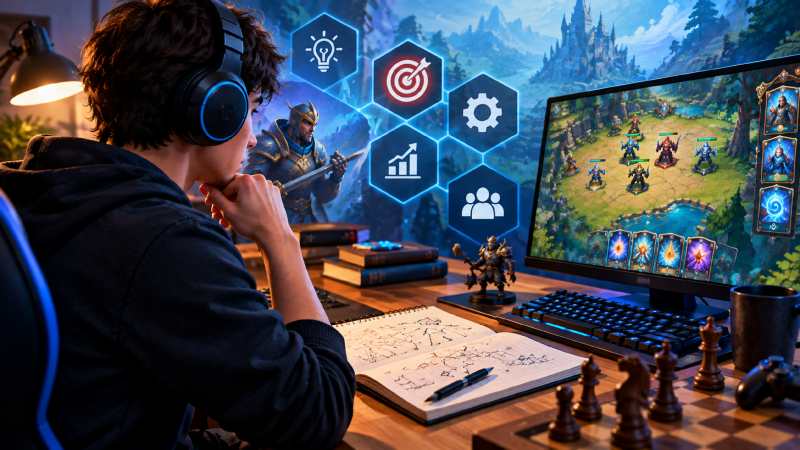
Gaming is more than simply pressing buttons and completing objectives. Modern games often require planning, quick thinking, patience, communication, and the ability to learn from mistakes. Whether someone enjoys strategy games, competitive multiplayer titles, action games, simulations, or casual experiences, developing the right approach can make gaming more enjoyable and rewarding.
Good players do not always succeed because they have the fastest reactions or the most expensive equipment. They often succeed because they understand the game, make thoughtful decisions, manage their resources, and adjust their approach when circumstances change. Learning effective strategies hearthssgaming can therefore help players become more confident while also making their gaming sessions more enjoyable.
Understand the Game Before Developing a Strategy
One of the most important steps toward becoming a better player is understanding the game itself. Before focusing on advanced techniques, take time to learn the basic rules, objectives, controls, characters, maps, resources, and win conditions.
Every game has its own systems. A strategy that works well in one title may be ineffective in another. Players should first understand what the game expects them to accomplish and how different mechanics interact.
For example, a strategy game may reward careful resource management, while a fast-paced action game may depend more heavily on positioning and timing. Understanding these differences provides a strong foundation for improvement.
Set Clear Gaming Goals
Improvement becomes easier when players know what they want to achieve. Instead of trying to become better at everything at once, focus on specific goals.
A goal might be improving accuracy, learning a new character, understanding a particular map, making faster decisions, or becoming more effective during team matches.
Small goals are usually easier to manage than broad objectives. A player could decide to improve one skill during several gaming sessions rather than expecting immediate mastery of every part of the game.
Clear goals also make progress easier to recognize. When players can see that a particular skill has improved, they are more likely to remain motivated.
Learn From Every Match
Winning is enjoyable, but losses can provide valuable information. Players who review their mistakes often improve faster than those who simply move on after every unsuccessful match.
After a difficult game, consider asking a few questions. What went wrong? Was the problem caused by poor positioning, weak timing, resource management, communication, or an incorrect decision?
The purpose is not to criticize yourself. Instead, the goal is to identify patterns that can be corrected.
For example, if a player repeatedly loses because they attack too early, they can practice waiting for a better opportunity. If they regularly run out of resources, they can work on planning ahead.
Improve Your Decision-Making
Decision-making is one of the most important skills in gaming. Players are often required to choose between several actions within a limited amount of time.
Strong decision-making involves considering both short-term and long-term consequences. A decision that looks beneficial immediately may create problems later.
Players should learn to evaluate risk and reward. Before making an important move, consider what could happen if the plan succeeds and what could happen if it fails.
Over time, this process becomes faster and more natural. Good decision-making does not mean making perfect choices every time. It means making informed choices and learning from the results.
Pay Attention to Positioning
Positioning can have a major effect on performance. Where a player stands, moves, or attacks can determine whether a situation becomes successful or difficult.
In competitive games, poor positioning may leave a player vulnerable. In strategy games, placing units or resources incorrectly can weaken an entire plan.
Developing awareness of the environment is therefore essential. Pay attention to important areas, escape routes, obstacles, objectives, and potential threats.
Good positioning also reduces unnecessary risks. Instead of constantly moving toward danger, players can learn to choose locations that provide useful advantages.
Manage Resources Carefully
Many games include resources such as health, money, energy, ammunition, equipment, cards, abilities, or building materials. Using these resources carelessly can make later stages much more difficult.
Resource management requires planning. Players should think about whether a resource is needed immediately or whether saving it could provide a greater advantage later.
This does not mean resources should always be saved. Sometimes using an important item at the right moment can create a significant advantage. The key is understanding when spending is worthwhile.
Players who develop better resource management often become more consistent because they are less likely to find themselves unprepared during important moments.
Study Maps and Game Environments
Knowing the environment can provide a major advantage. Maps often contain useful locations, shortcuts, defensive positions, objectives, hidden areas, and dangerous zones.
Spend time learning the layout instead of relying entirely on memory during competitive situations. Notice where important events usually occur and which areas provide better visibility or protection.
Map knowledge also improves movement. Players who understand their surroundings can reach objectives more efficiently and anticipate where opponents may appear.
Even in games without traditional maps, environmental awareness remains valuable. Understanding the layout of levels and recognizing important visual details can improve performance.
Develop Better Timing
Timing can separate an average decision from an excellent one. Attacking too early, using an ability too soon, or moving at the wrong moment can turn a strong opportunity into a disadvantage.
Players should learn to recognize situations rather than simply reacting automatically. Sometimes waiting a few seconds creates a much better opportunity.
Practice helps develop this sense of timing. With experience, players begin to recognize patterns and understand when action is appropriate.
Patience should not be confused with inactivity. Good timing means knowing when to wait and when to act decisively.
Build Consistent Practice Habits
Practice is most effective when it is consistent. Playing for many hours once and then taking a long break may not provide the same benefits as shorter, regular sessions.
A simple practice routine can focus on one or two specific skills. For example, a player might spend part of a session practicing movement and another part working on accuracy or decision-making.
Regular practice also helps players recognize gradual improvements. Skills that initially feel difficult can become automatic after enough repetition.
The goal should not be to play endlessly. Instead, focus on meaningful practice that addresses specific weaknesses.
Learn to Adapt Your Strategy
No strategy works perfectly in every situation. Games change, opponents behave differently, teammates make unexpected decisions, and circumstances can shift quickly.
Successful players know how to adapt.
The strategies hearthssgaming approach should therefore focus on flexibility rather than following one plan without considering what is happening around you. If a particular tactic is failing repeatedly, identify why and consider another approach.
Adaptability is especially important in competitive games. Opponents may recognize predictable behavior and use it against you. Changing your approach can make you less predictable and more difficult to counter.
Improve Communication in Team Games
Team-based games require more than individual skill. Communication can determine whether a team works together or becomes disorganized.
Effective communication should be clear, useful, and timely. Players should share important information without creating unnecessary distractions.
Instead of blaming teammates after mistakes, focus on communicating what needs to happen next. Positive communication can improve coordination and maintain team morale.
Listening is equally important. Good teamwork involves understanding what others are doing and adjusting your own decisions accordingly.
Avoid Playing on Automatic
Sometimes players continue playing without actively thinking about their decisions. This can create repetitive habits and prevent improvement.
Try to remain mentally engaged during important moments. Think about why you are making a particular move instead of simply repeating familiar actions.
This does not mean every second of a game needs intense concentration. However, staying aware of decisions, mistakes, and opportunities can make practice more productive.
Mindful gaming can also help players recognize weaknesses that might otherwise remain unnoticed.
Analyze Strong Players
Watching skilled players can be an excellent learning method. Instead of simply watching for entertainment, pay attention to their decisions.
Look at how they position themselves, manage resources, respond to pressure, communicate, and react to unexpected situations.
The most useful lessons often come from understanding why a player made a particular decision. Try to identify the reasoning behind their actions rather than copying movements without understanding them.
The strategies hearthssgaming mindset can become stronger when players combine observation with their own experience and experimentation.
Avoid Common Gaming Mistakes
Many players make mistakes that can easily become habits. These include rushing into fights, ignoring objectives, wasting resources, refusing to adapt, becoming distracted, and allowing frustration to influence decisions.
Recognizing these habits is the first step toward correcting them.
Another common mistake is focusing only on victories. Winning is valuable, but improvement requires attention to the process. A player can win while making poor decisions, just as they can lose while making several excellent choices.
Focus on learning rather than judging every session entirely by its result.
Control Frustration and Maintain Patience
Emotional control is an underrated gaming skill. Frustration can cause players to make rushed decisions, ignore important information, or communicate poorly with teammates.
When a game becomes stressful, taking a short break can help restore concentration. There is nothing wrong with stepping away for a few minutes and returning with a clearer mindset.
Patience also makes learning easier. Improvement rarely happens instantly. Players may need to practice the same skill repeatedly before seeing meaningful results.
A calm approach helps turn mistakes into lessons rather than sources of unnecessary frustration.
Balance Gaming With Daily Responsibilities
Gaming should remain enjoyable and fit comfortably into everyday life. Players can create a schedule that allows time for work, study, family, exercise, sleep, and other important activities.
Taking regular breaks can also improve concentration. Long sessions without rest may lead to tiredness and reduced performance.
A balanced routine allows gaming to remain a positive hobby rather than becoming a source of stress.
Experiment With Different Approaches
There is rarely one perfect way to play a game. Different players may have different strengths, preferences, and decision-making styles.
Experimenting with different approaches can reveal what works best for you. Try alternative strategies, characters, equipment combinations, routes, or play styles when the game allows it.
Experimentation also encourages creativity. Instead of always following familiar patterns, players can discover new solutions to difficult situations.
Keep Track of Your Progress
Tracking improvement can provide useful motivation. Players can record goals, identify recurring mistakes, and note which skills they are currently practicing.
Progress does not always appear as a dramatic increase in rankings or victories. Sometimes improvement appears through better awareness, fewer mistakes, stronger communication, or greater confidence.
Reviewing progress occasionally can show how far you have come and help you decide what to work on next.
Create a Long-Term Improvement Mindset
Becoming a better gamer is a gradual process. There will be strong sessions, difficult sessions, unexpected victories, and frustrating losses.
The most effective approach is to remain curious and willing to learn. Treat every experience as an opportunity to understand the game more deeply.
The strategies hearthssgaming concept can be applied broadly by combining preparation, awareness, adaptability, patience, practice, and thoughtful decision-making. These qualities can benefit players across many different types of games.
Final Thoughts
Improving gaming skills does not require complicated techniques or endless hours of practice. It starts with understanding the game, setting realistic goals, learning from mistakes, and developing better habits.
Players should focus on decision-making, positioning, timing, resource management, communication, and adaptability. They should also remain patient and remember that improvement takes time.
The best gaming strategy is not always the most complicated one. Often, it is a simple approach that players understand well and can apply consistently. By practicing with purpose and staying open to learning, players can gradually become more confident, capable, and thoughtful gamers.